Diffusion through a permeable material: practical
Lesson 3 / 4
Lesson video
Lesson slides
Lesson details
Lesson outcome
Waxaan sharxi karaa indha-indheynta faafitaanka iyada oo loo marayo jello cubes (walax daloola).
Introduction
In this lesson: I can explain observations of diffusion through jelly cubes (a permeable material). Particles of a liquid can move through a material by diffusion if the material is permeable. Observe a liquid diffusing into a jelly cube.
Show transcript
Worksheet
not available yet
Quizzes
1. Who is correct?
- Aisha: "Only liquids are made up of particles."
- Izzy: "Only gasses are made up of particles."
- Lucas: "Only liquids and gasses are made up of particles."
- Correct answer:Sam: "Solids, liquids and gasses are made up of particles."
2. The particles that make up a liquid are ...
- fixed in position.
- constantly moving from side to side.
- Correct answer:constantly moving in random directions.
3. Which statement is true?
- Correct answer:There is a higher concentration in area A than area B.
- There is a higher concentration in area B than area A.
- The concentration is the same in area A and area B.
4. In which direction will there be net movement of particles?
- Correct answer:net movement from area A to area B
- net movement from area B to area A
- net movement in both directions
- no net movement
5. In which direction will particles move along the concentration gradient?
- only from area A to area B
- only from area B to area A
- Correct answer:in both directions
- in neither direction
1. Particles of liquid can move into a cube of jelly by the process of ...
- concentration.
- decolourisation.
- Correct answer:diffusion.
- prediction.
- variation.
2. In which beaker have particles of acid diffused all the way to the centre of the jelly cube?
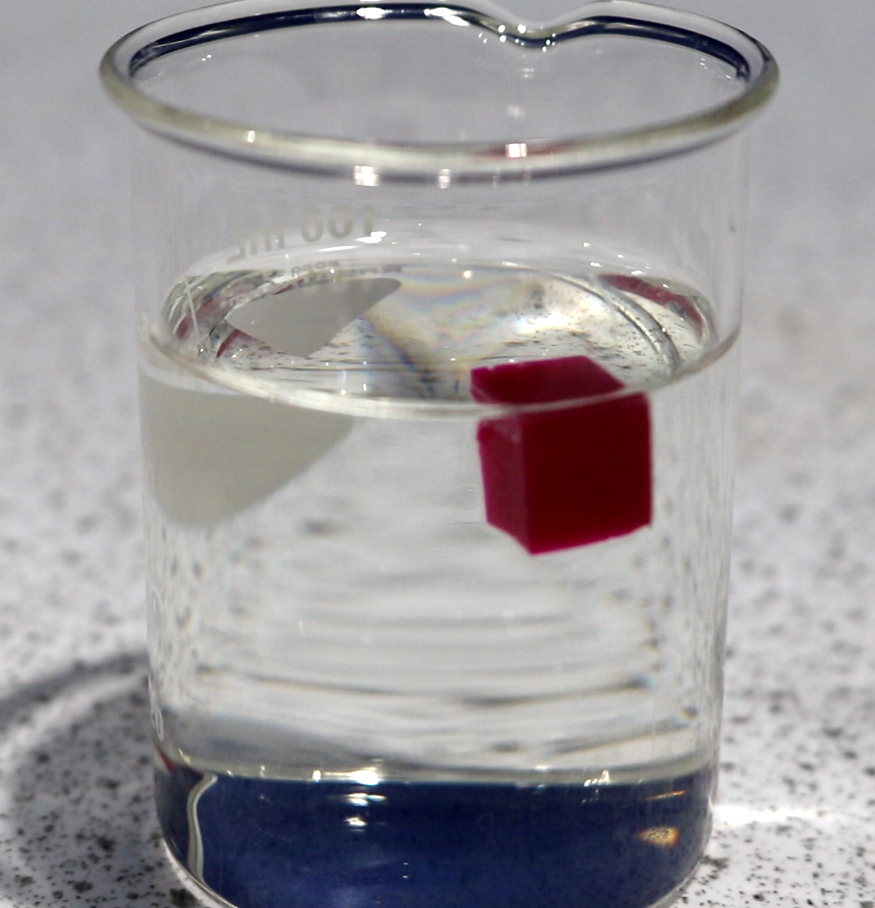 beaker A
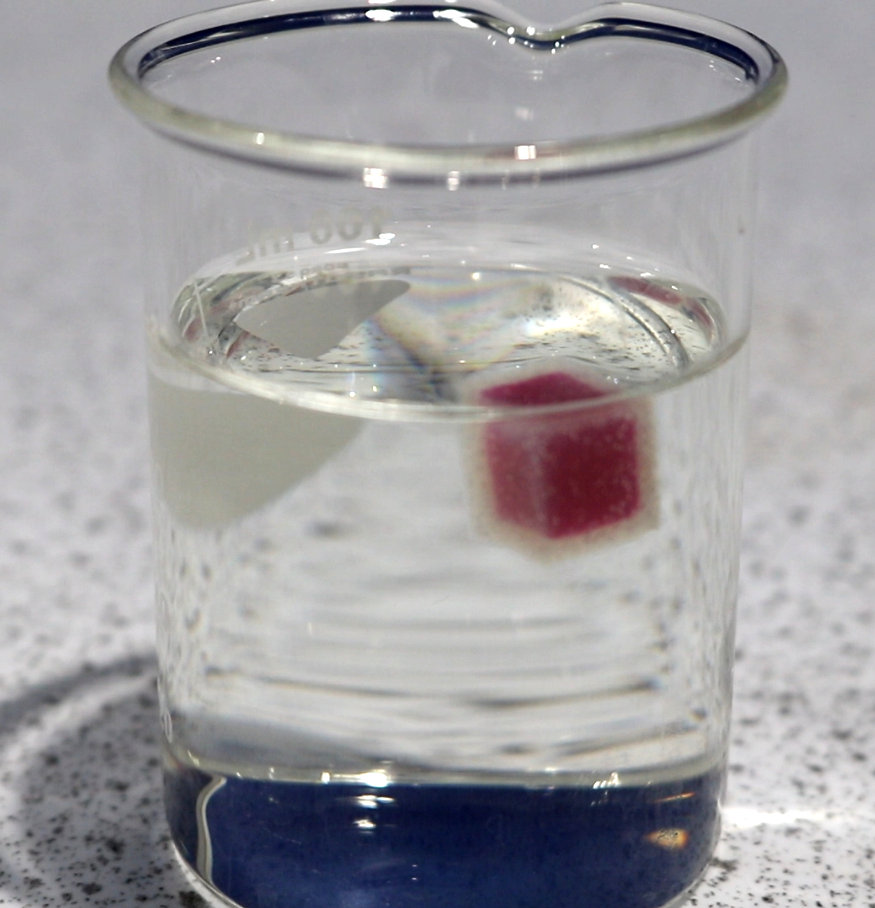 beaker B
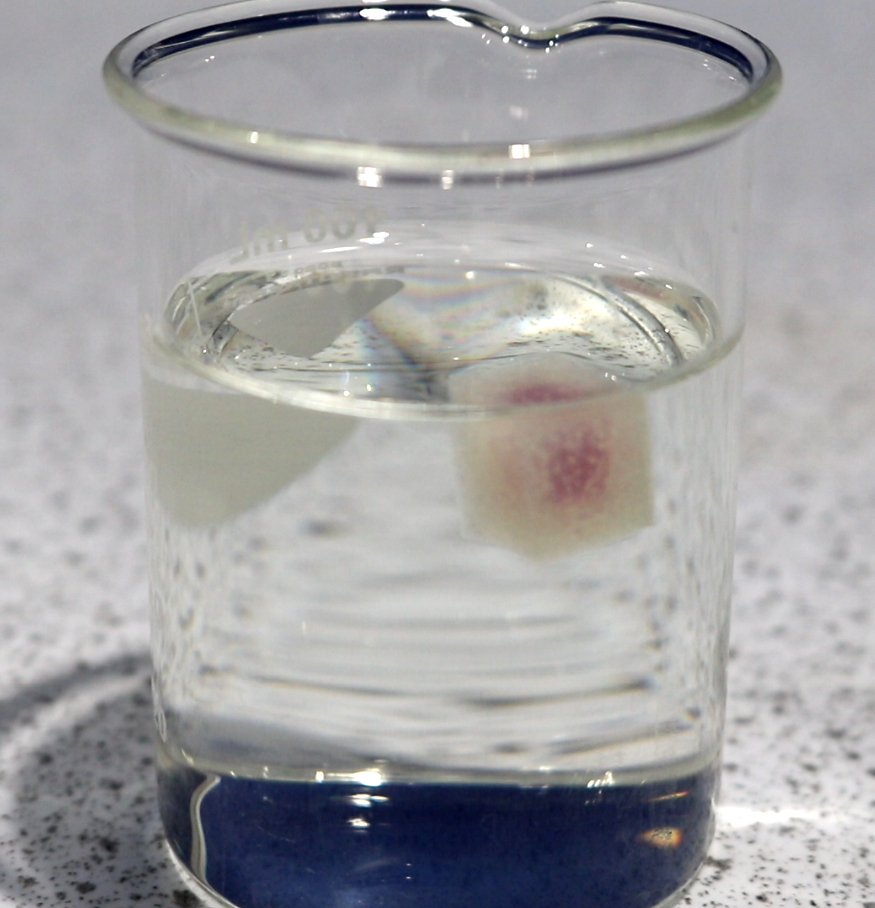 beaker C
- Correct answer:
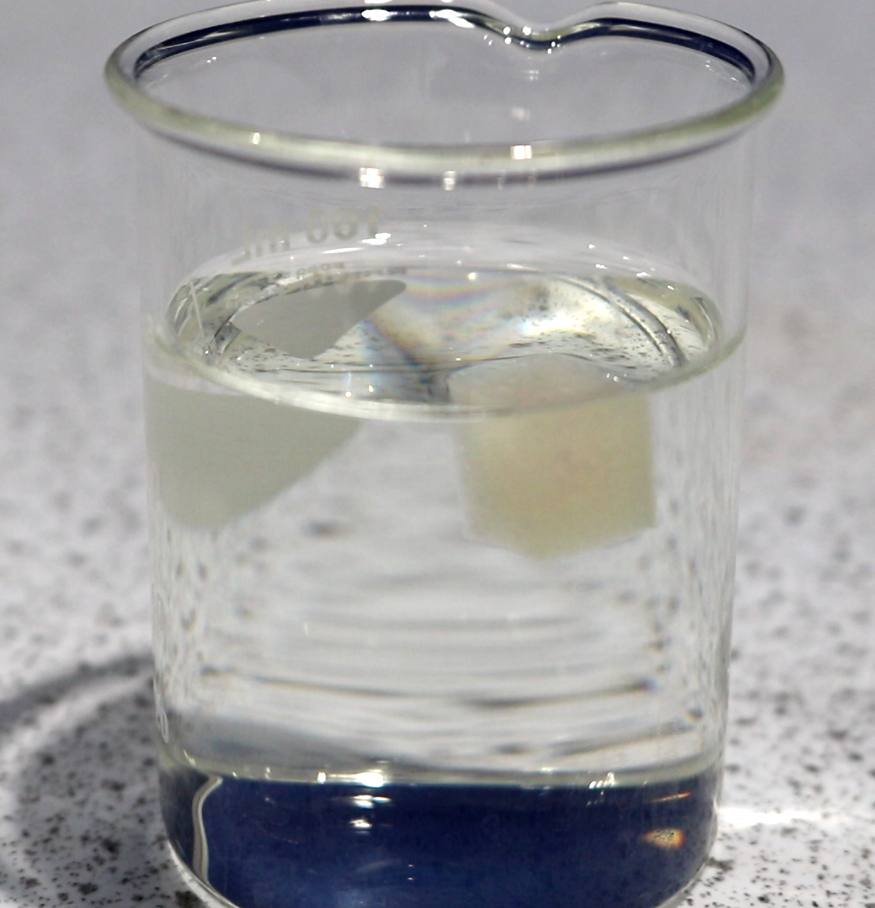 beaker D
3. Which scientific prediction is most likely to be correct?
- Correct answer:At lower temperatures, the time taken to decolourise the cube will be longer.
- At lower temperatures, the time taken to decolourise the cube will be shorter.
- Temperature will have no effect on the time taken to decolourise the cubes.
4. Jelly cubes of three different widths are placed in acid. Which cube will be completely decolourised by the acid in the shortest time?
- Correct answer:The cube of width 1.0 cm
- The cube of width 1.5 cm
- The cube of width 2.0 cm
- The taken will be the same for each of the cubes.
What pupils see
The same lesson as a pupil sees it. You can set any section as work on its own.
- IntroductionPrepare
- Starter quizActivate · 5 questions
- Lesson videoLearn
- Exit quizCheck · 4 questions