Refracting light
Lesson 5 / 7
Lesson video
Lesson slides
Lesson details
Lesson outcome
Waxaan sharxi karaa oo sawiri karaa sida iftiin uu u qallooco marka uu ka gudbo hal dhexdhexaad (medium) una gudbo mid kale, waxaana sharxi karaa sida qallooca uu u keeni karo sawirro aan dhab ahayn (virtual images).
Introduction
In this lesson: I can describe and draw how a ray of light refracts when it moves from one medium to another, and explain how refraction can cause virtual images. Light changes direction when it moves into a new medium (material) at an angle to the normal. This is called refraction. When light enters a transparent material from air, it turns towards the normal.
Show transcript
Worksheet
not available yet
Quizzes
1. Which of the following types of material transmit light?
- opaque
- Correct answer:translucent
- Correct answer:transparent
2. Which of the following statements describe a light ray?
- Correct answer:It is not a real thing.
- It is produced by a laser.
- It is produced by a ray box.
- Correct answer:It is a way of modelling light.
3. Which of the following describe the normal in a ray diagram for reflection?
- It is drawn parallel to the mirror.
- Correct answer:It is drawn at right angles to the mirror.
- Correct answer:It is useful for measuring angles on a ray diagram.
- It is useful for measuring distances on a ray diagram.
- Correct answer:It meets the mirror where the ray meets the mirror.
4. Which of the following best describes the conclusion of an experiment?
- a list of ways to improve the experiment
- a table and graph of the measurements made
- Correct answer:a statement of what was discovered, and how it is known
- a description of the equipment used and the steps taken
1. Which of the following is a definition of ‘medium’?
- a single light ray
- a collection of light rays
- a material that light reflects from
- a boundary between two materials
- Correct answer:a material that light is travelling through
2. Which of the following is a definition of ‘refraction’?
- the opposite of reflection
- the opposite of transmission
- a change in colour when light enters a new material
- Correct answer:a change in direction when light enters a new material
3. Which of the following are possible when light hits a boundary between two materials?
- Correct answer:transmission without refraction
- refraction without transmission
- Correct answer:both transmission and refraction
- Correct answer:neither transmission nor refraction
4. An incident ray hits a boundary between air and glass. There is no refraction if the angle of incidence is...
- Correct answer:0°.
- 45°.
- 90°.
- 180°.
5. The diagram shows three light rays entering a block of glass. Which of the following statements are correct?
- Ray A is refracted least.
- Correct answer:Ray C is refracted least.
- Correct answer:All three rays are bent towards the normal.
- All three rays are bent away from the normal.
6. Which of the following diagrams show possible paths of light rays passing through transparent rectangular blocks?
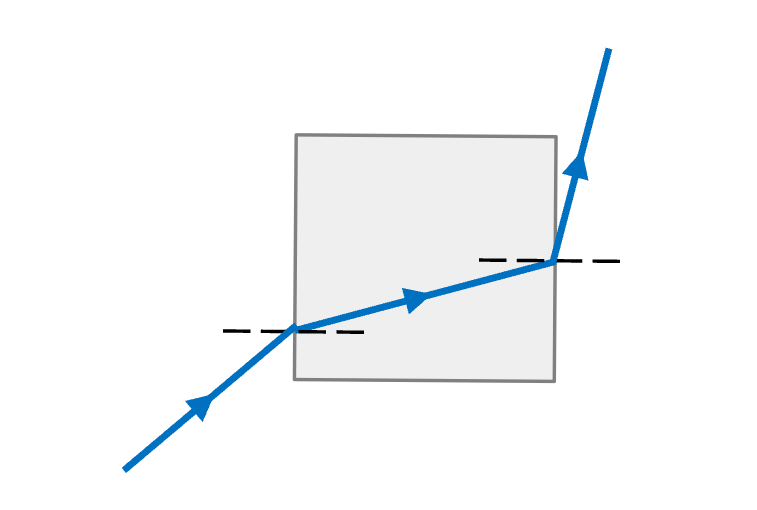
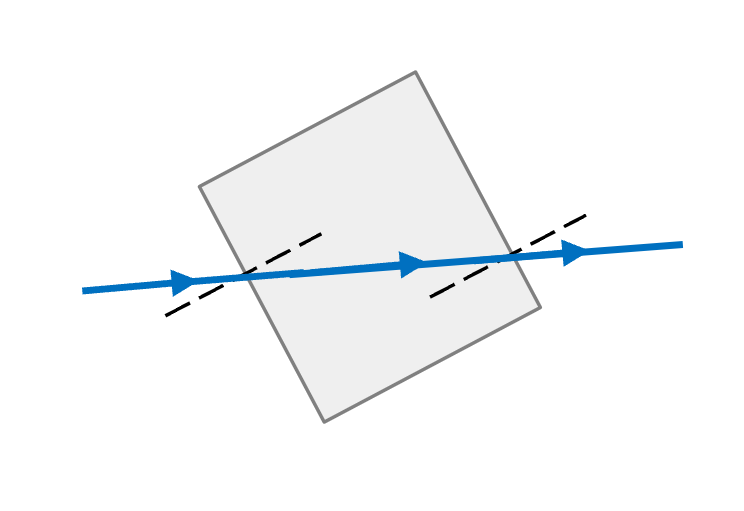
- Correct answer:
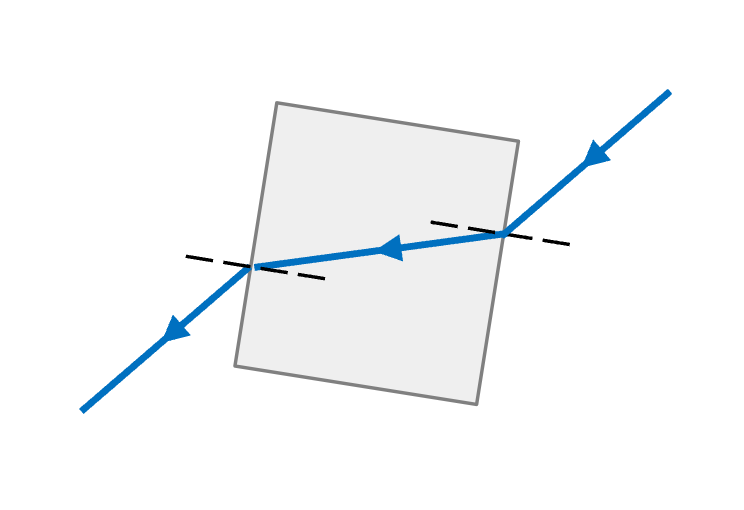
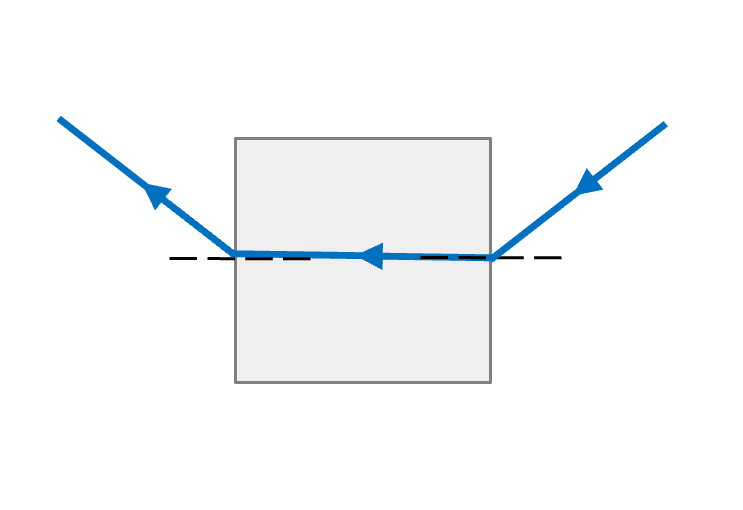
What pupils see
The same lesson as a pupil sees it. You can set any section as work on its own.
- IntroductionPrepare
- Starter quizActivate · 4 questions
- Lesson videoLearn
- Exit quizCheck · 6 questions