Electric current
Lesson 6 / 8
Lesson video
Lesson slides
Lesson details
Lesson outcome
Waxaan qeexi karaa sida unuggu (cell) u keeno qulqulka korontada wareegga iyo sida elektaroonnadu u dhaqaaqaan.
Introduction
In this lesson: I can describe how a cell causes current in a circuit and explain the movement of electrons. One end of a battery has a positive charge and one end has a negative charge, because of chemical reactions inside it. A battery pushes electric charge (electrons) one way round a complete circuit.
Show transcript
Worksheet
not available yet
Quizzes
1. In which circuit will the bulb light?
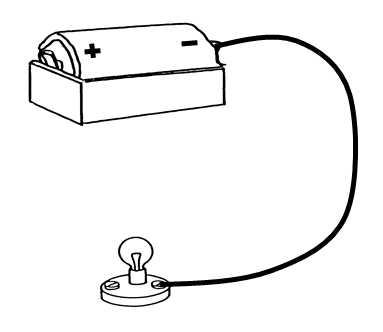
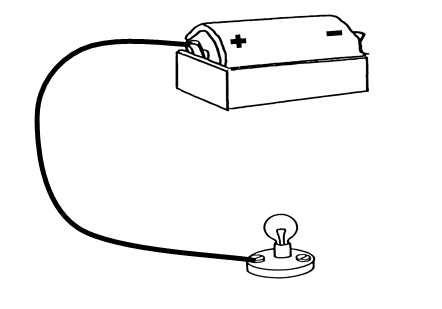
- Correct answer:
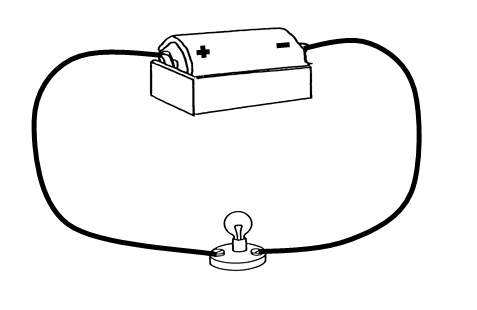
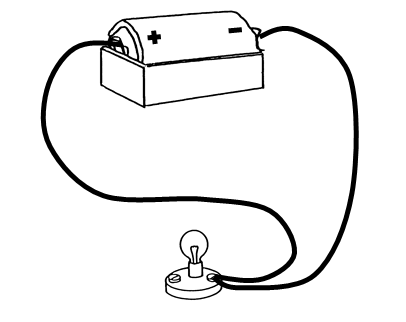
2. A motor is connected to a cell and spins. Which of the following would cause the motor to spin faster?
- adding a bulb to the series circuit
- adding a switch to the series circuit
- adding another motor to the series circuit
- Correct answer:adding another cell to the series circuit
3. What mistake has been made in this circuit diagram?
- The switch is open.
- The motor is before the switch.
- The ammeter should be beside the motor.
- Correct answer:The battery is not connected to the lead.
4. Which component is represented by the circuit symbol shown?
- a lamp
- a motor
- Correct answer:a buzzer
- a resistor
5. Which of the following statements describe ways to fix a faulty circuit?
- disconnecting all the components and reconnecting them
- changing the direction of the cells
- Correct answer:testing each component with a test circuit
- Correct answer:replacing each component, one by one, with a working one
- switching the circuit off and then on again
6. Why are there certain rules for drawing circuit diagrams?
- Correct answer:so that scientists and engineers around the world can understand them
- to make them look nicer
- so they are easy to mark in exams
- to make them more professional looking
1. Which of the following statements about the terminals of a cell is correct?
- Correct answer:A cell has one positive terminal and one negative terminal.
- A cell has two positive terminals.
- A cell has two negative terminals.
- A cell has a neutral terminal and either a positive or a negative terminal.
2. What is inside a cell that pushes the electric charges round a circuit?
- small magnets
- mini pumps
- microscopic motors
- Correct answer:chemicals that react
3. What is the name of the moving charges that carry electric current through a metal wire?
- protons
- Correct answer:electrons
- magnetrons
- neutrons
4. What is the normal speed of electrons flowing through a metal wire?
- Correct answer:a few millimetres per second
- a few metres per second
- a few kilometres per second
- a few million metres per second
5. Which of the following objects can be used to make a simple cell?
- two pieces of the same metal, liquid oil and some wires
- two pieces of the same metal, a weak acid solution and some wires
- two different metals, liquid oil and some wires
- Correct answer:two different metals, a weak acid solution and some wires
6. Which two of these objects have free electrons that can carry an electric current?
- plastic ruler
- Correct answer:copper wires
- air in the room
- Correct answer:steel paperclips
- wooden pencil
What pupils see
The same lesson as a pupil sees it. You can set any section as work on its own.
- IntroductionPrepare
- Starter quizActivate · 6 questions
- Lesson videoLearn
- Exit quizCheck · 6 questions