Measuring electric current
Lesson 5 / 8
Lesson video
Lesson slides
Lesson details
Lesson outcome
Waxaan qiyaasi karaa qulqulka korontada oo aan qeexi karaa xeerka qulqulka wareegga taxanaha ah.
Introduction
In this lesson: I can measure current and describe the rule for current in a series circuit. An ammeter is used to measure the size of an electric current. An ammeter measures the current flowing through it without affecting the current in the circuit it is connected into.
Show transcript
Worksheet
not available yet
Quizzes
1. What is the name of the tiny, charged particles that flow in a circuit?
- protons
- neutrons
- atoms
- Correct answer:electrons
2. What is the name of the component that can be closed (to allow current to flow) or opened (to stop current flowing)?
- a lamp
- a battery
- an ammeter
- Correct answer:a switch
- a resistor
3. Which of the following words is used to describe a flow of charge?
- voltage
- Correct answer:current
- resistance
- power
4. Where do electrons enter a cell?
- They enter through the negative terminal.
- Correct answer:They enter through the positive terminal.
- They enter through both terminals.
- Electrons only leave a cell; they don’t enter.
5. Where would you find electrons that can flow to cause a current? Select all that apply.
- Correct answer:metal wire in a circuit
- Correct answer:a resistor
- plastic insulation around a wire
- Correct answer:a battery
- Correct answer:a bulb
1. Which of the following images is of an ammeter?

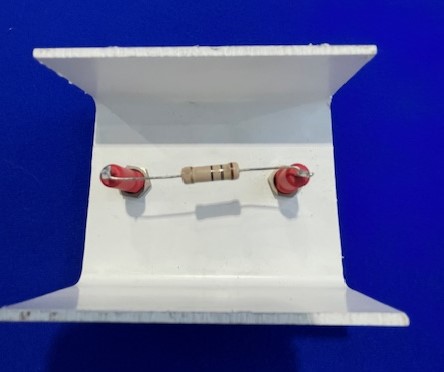
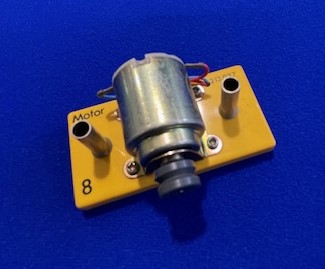
- Correct answer:
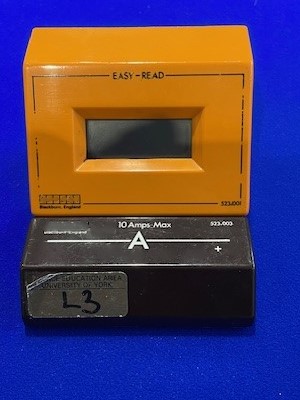
2. What happens to the current in a series circuit?
- it decreases as it passes through components
- it increases as it passes through components
- Correct answer:it stays the same as it passes through components
- it decreases as it passes through components then returns to the original value
3. What will happen to the current when an ammeter is placed in a series circuit?
- the current will increase
- Correct answer:the current will remain the same
- the current will decrease
- the current will increase if the ammeter is placed before the cell or battery
- the current will decrease if the ammeter is placed after the cell or battery
4. Which of the following statements about this circuit is correct?
- Correct answer:the ammeters have no effect on the current
- the lamp has no effect on the current
- the lamp decreases the current and the ammeters increase the current
- both the lamp and the ammeters decrease the current
5. Which of the following statements about the readings on the two ammeters is correct?
- the reading on ammeter 1 will be higher than the reading on ammeter 2
- the reading on ammeter 1 will be lower than the reading on ammeter 2
- ammeter 1 will have a positive reading and ammeter 2 will have negative one
- Correct answer:the reading on both ammeters will be the same
6. What of the following statements about the lamps in the circuit shown is correct?
- Correct answer:the lamps will all be equally bright
- lamp 1 will be brightest, followed by lamp 2 and lamp 3 will be dimmest
- lamp 3 will be brightest, followed by lamp 2 and lamp 1 will be dimmest
- lamps 1 and 3 will be bright and lamp 2 will be dim
What pupils see
The same lesson as a pupil sees it. You can set any section as work on its own.
- IntroductionPrepare
- Starter quizActivate · 5 questions
- Lesson videoLearn
- Exit quizCheck · 6 questions